How Wheelchair Securement Loops Are Tested: WC18, WC19, and the UMTRI Story
The Organization Behind the Standard
When wheelchair users ride in paratransit vans, accessible transit buses, or school buses, their safety depends on a chain of components: the wheelchair frame, the tie-down straps, and the securement loops that anchor those straps to the vehicle floor. The engineering foundation that underlies all of those components traces back to one institution: the University of Michigan Transportation Research Institute (UMTRI).
UMTRI’s Rehabilitation Engineering Research Center on Wheelchair Transportation Safety (RERC-WTS) spent years studying real-world wheelchair transit accidents, analyzing failure modes, and developing the voluntary standards that the industry now uses as its baseline for product development and fleet procurement. That work produced two landmark documents: WC18 and WC19.
WC18: The Standard for Securement Hardware
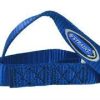
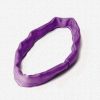
WC18 — formally the Wheelchair Tie-Down and Occupant Restraint Systems (WTORS) standard — defines performance requirements for the hardware that connects a wheelchair to a vehicle floor. That hardware includes the tie-down straps, the cam buckles or ratchet mechanisms, and critically, the securement loops that attach to the wheelchair frame itself.
A compliant WC18 securement loop must withstand the forces generated during a standardized frontal crash simulation. The published test condition is a 20G frontal sled test — an aggressive deceleration event that replicates a serious frontal collision. Products that pass this test demonstrate that the webbing, stitching, hardware, and attachment geometry can hold under crash-level loads.
AMF Bruns, Q’Straint, and Sure-Lok — the three brands we carry at WheelchairLoop.com — manufacture their securement loops to meet WC18 requirements. That is the voluntary industry baseline for professional-grade securement hardware in North America.
What WC18 Tests
The WC18 test protocol evaluates the entire tie-down system, including:
- Tensile strength of webbing — The woven strap material must not tear or elongate beyond defined limits under load.
- Hardware integrity — Buckles, hooks, and attachment rings must not open, deform, or fracture.
- Stitching retention — Bar-tack and box-stitch patterns must hold the loop geometry intact through the full test event.
- System behavior under combined loading — The test considers fore-aft, vertical, and lateral force components simultaneously, not just a simple pull.
WC19: The Standard for the Wheelchair Itself
While WC18 governs the securement hardware, WC19 addresses the other side of the equation: the wheelchair that the straps attach to. A WC19-compliant wheelchair has been designed and tested to serve as a seat in a motor vehicle. That means the frame includes designated, tested tie-down attachment points (typically four) that can accept the hooks or loops of a WC18-compliant tie-down system.
This matters because not every wheelchair on the road today is WC19 compliant. Older chairs, some power chairs, and certain manual chairs may not have factory-designated securement points. In those cases, fleet operators need to know how to attach tie-downs safely — and securement loop geometry becomes especially important for distributing load correctly.
The Interaction Between WC18 and WC19
The WC18/WC19 pairing is intentional. UMTRI’s researchers understood that a crash-rated strap connected to a non-rated attachment point on a wheelchair frame could still result in failure — the chair frame could buckle, the attachment point could pull free, or the load path through the seat could injure the occupant. WC19 closes that gap by requiring the wheelchair manufacturer to engineer and test the securement interface, not just the strap manufacturer.
When a WC19-compliant wheelchair is secured with WC18-compliant hardware, the system has been tested end-to-end. That system-level assurance is why transit agencies and paratransit operators increasingly specify both standards in their procurement requirements.
SAE J2249 and ISO 10542
The UMTRI-developed standards were also incorporated into broader industry frameworks. SAE J2249 is the Society of Automotive Engineers standard for wheelchair tie-down and occupant restraint systems — it references similar test conditions and is widely cited in transit procurement documents across North America. ISO 10542 is the international equivalent, enabling global manufacturers to produce hardware that meets both North American and European regulatory expectations.
These overlapping standards mean that when you purchase securement loops from AMF Bruns, Q’Straint, or Sure-Lok, those products reflect a consistent global engineering baseline — not just one organization’s internal spec.
FMVSS 222 and School Bus Applications
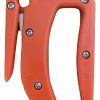
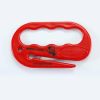
For school buses specifically, the relevant federal standard is FMVSS 222 — Federal Motor Vehicle Safety Standard 222, which governs school bus passenger seating and crash protection. School buses transporting students who use wheelchairs must meet both FMVSS 222 requirements and the National Standards for School Buses, which specify securement hardware performance for that vehicle category. Products like the Sure-Lok 8705 web cutter are designed with school bus compliance in mind.
What This Means When You’re Buying Loops
When you shop WheelchairLoop.com, every securement loop in our catalog comes from manufacturers whose products are built to WC18 requirements. You’re not choosing between “tested” and “untested” products — you’re choosing between different designs, lengths, and hardware configurations, all of which share the same engineering foundation.
Our parent organization, WheelchairStrap.com, has been supplying wheelchair securement equipment for over 30 years. That experience informs how we curate our catalog and how we can help fleets choose the right configuration for their specific vehicles and rider populations.
Questions? We’re Here.
Questions about WC18-compliant securement loops? Call our team at 800-884-6456 or shop our full securement loop catalog.
Trusted brands we carry: AMF Bruns · Q’Straint · Sure-Lok